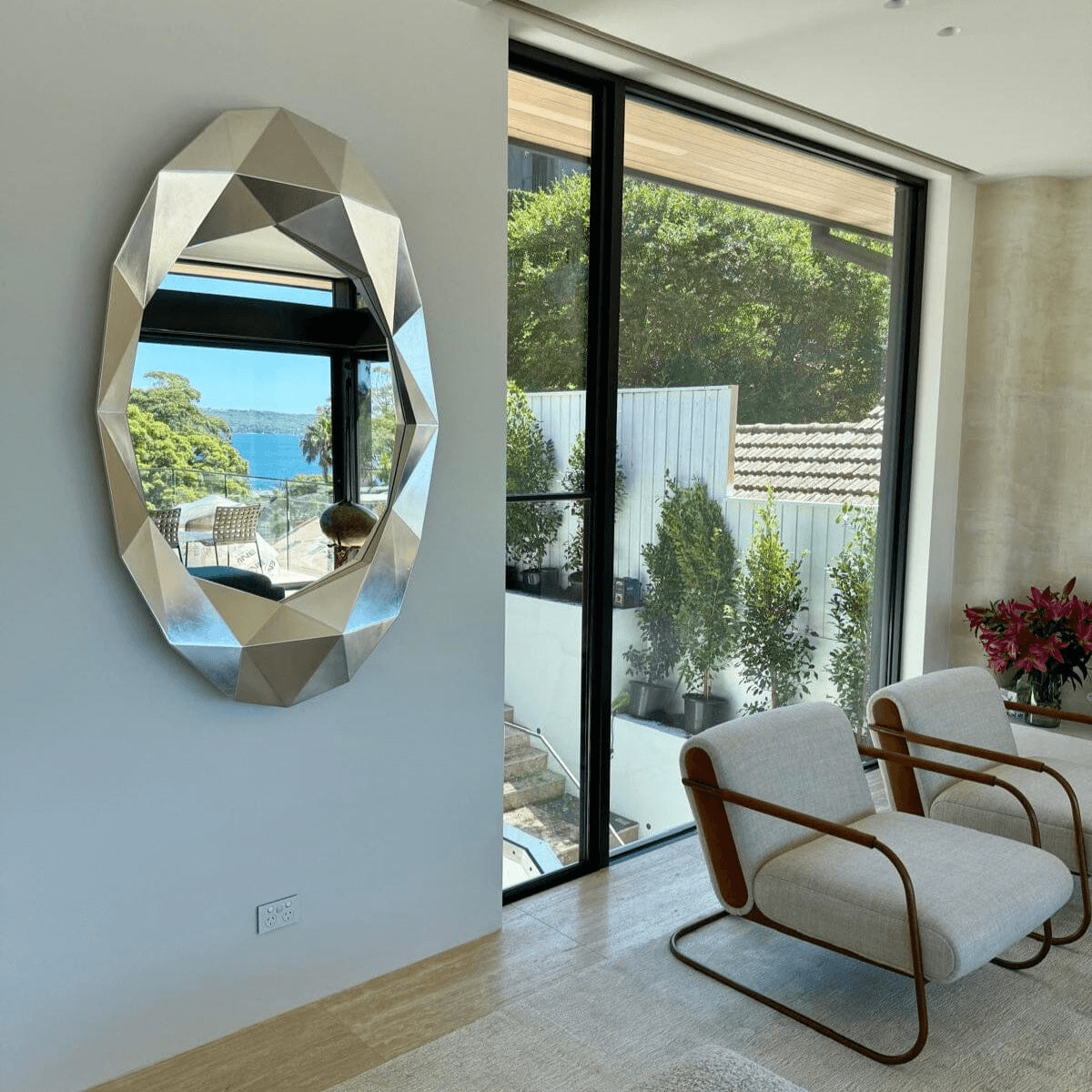
ANTIQUE MIRROR

Introduction to Antique-Finish Mirrors (仿古镜)
1. What is an Antique-Finish Mirror?
An antique-finish mirror (仿古镜) is a decorative mirror treated to achieve a vintage, weathered appearance. Unlike standard mirrors, it features intentional imperfections such as uneven reflective surfaces, dark spots, and distressed edges to emulate the look of aged historical mirrors.
2. Manufacturing Process
The production involves both chemical and mechanical techniques to create controlled degradation:
Key Steps:
- 1.
Glass Selection:
- •Clear or low-iron glass is used for higher clarity.
- 2.
Surface Etching:
- •Chemical Etching: Hydrofluoric acid or other agents are applied to create uneven reflective areas.
- •Mechanical Abrasion: Sandblasting or manual scratching adds texture.
- 3.
Silvering Modification:
- •The silver layer is partially removed or oxidized to create dark patches.
- •Copper or selenium compounds may be added for yellowish or grayish tones.
- 4.
Edge Distressing:
- •Edges are hand-chipped, polished, or beveled to mimic aged wear.
- 5.
Protective Coating:
- •A clear sealant protects the surface while preserving the antique effect.
3. Applications & Use Cases
| Application Field | Examples |
|---|---|
| Interior Design | Vintage-style hotels, bars, theaters, and residential spaces. |
| Furniture & Decor | Distressed mirror cabinets, antique frames, decorative wall panels. |
| Retail & Hospitality | Boutique stores, luxury restaurants, heritage-themed venues. |
| Art & Installation | Artistic mirrors for galleries, stage props, film sets. |
| Religious & Cultural Sites | Temples, palaces, and historical restoration projects. |
4. Advantages & Limitations
✅ Advantages:
- •Aesthetic Uniqueness: Each mirror has irregular patterns, ensuring no two are identical.
- •Versatility: Complements vintage, industrial, Bohemian, and classical design styles.
- •Customization: Level of aging (light to heavy) and tint (yellow, gray, black) can be tailored.
⚠ Limitations:
- •Lower Reflectivity: Compared to standard mirrors due to intentional surface defects.
- •Maintenance: Requires gentle cleaning to preserve distressed features.
- •Cost: Handcrafted processes make it more expensive than mass-produced mirrors.
5. Design Tips
- •Lighting Pairing: Use warm, soft lighting (e.g., Edison bulbs) to enhance the vintage ambiance.
- •Contrast Placement: Install against raw materials (exposed brick, weathered wood) for maximal effect.
- •Framing Options: Pair with wrought iron, gilded, or wooden frames for added authenticity.
6. Market Trends
- •Sustainable Design: Recycled glass bases are increasingly used for eco-friendly antique mirrors.
- •Hybrid Techniques: Combining digital printing with manual distressing for custom patterns.
- •Global Demand Rising: Popular in European and Asian markets for heritage-inspired projects.
Why Choose Antique-Finish Mirrors?
Antique mirrors bridge historical charm and modern artistry, offering a timeless aesthetic that standard mirrors cannot replicate. They are ideal for designers seeking to create spaces with narrative depth and visual warmth.
For project-specific customization, please leave the messages for checking more details! ?️
Current Global Glass Market Overview
Silver Mirror vs Aluminum Mirror