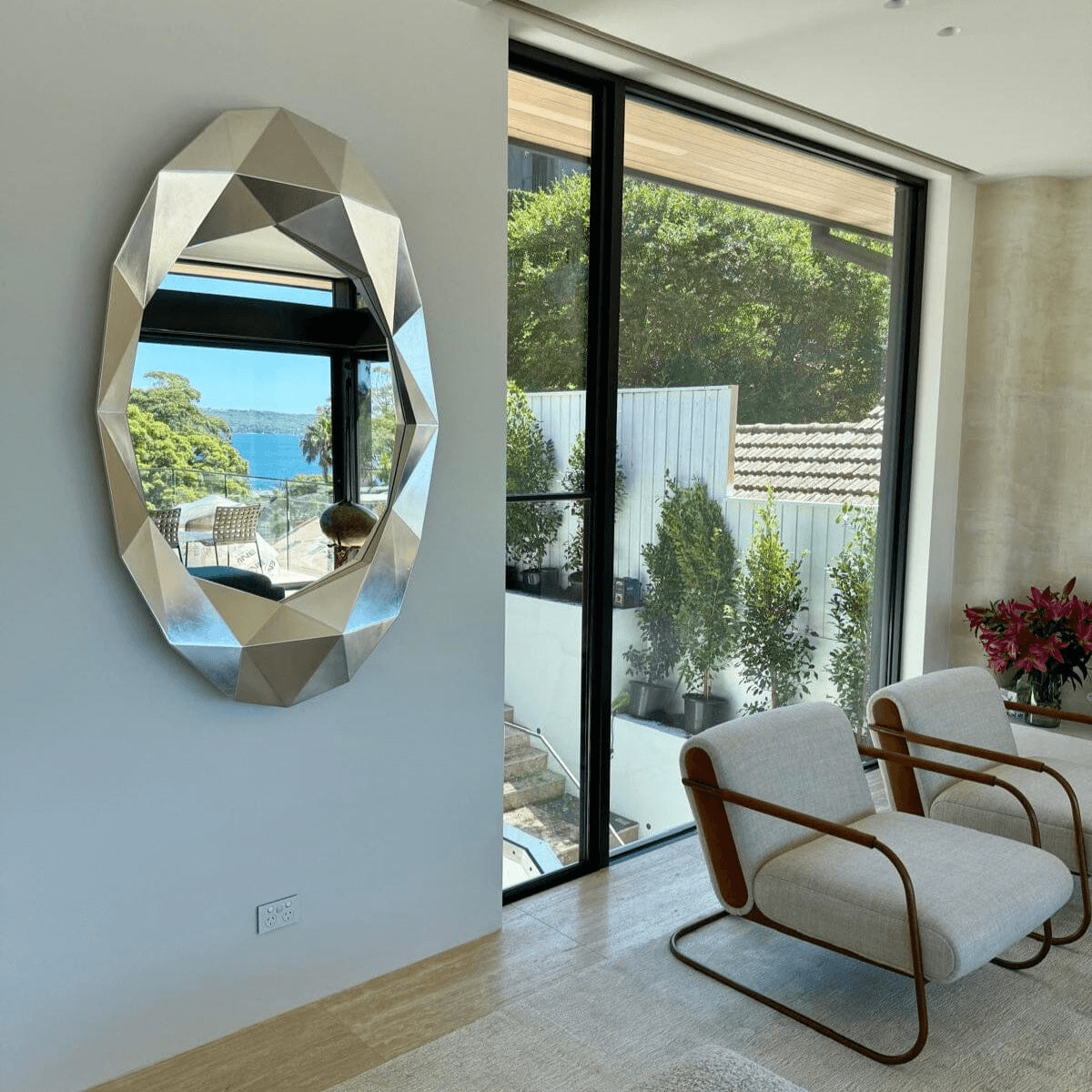
Back Paint Glass
author: Jennifer
2025-08-01


Manufacturing Process of Painted Glass
Painted glass, also known as back-painted glass or lacquered glass, is a decorative glass product widely used in interior design, furniture, and architectural applications. Its manufacturing process involves several key steps to ensure a smooth, durable, and vibrant finish.
1. Glass Selection & Cleaning
- High-quality float glass or tempered glass is selected based on application requirements.
- The glass surface is thoroughly cleaned to remove dust, grease, and impurities using detergents and solvents.
2. Primer Coating (Optional)
- A primer may be applied to enhance paint adhesion, especially for long-lasting applications.
3. Paint Application
- Spray Painting: Specialized glass paint (often polyester or acrylic-based) is evenly sprayed onto the glass surface using automated or manual spray guns.
- Roller Coating: Alternatively, paint is applied with rollers for a uniform layer.
- Multiple coats may be applied to achieve the desired color depth and opacity.
4. Drying & Curing
- The painted glass is air-dried or baked in a controlled-temperature oven (typically 150–200°C) to harden the paint and ensure durability.
- Baking enhances scratch resistance and chemical stability.
5. Quality Inspection
- The finished product is checked for defects like bubbles, uneven coating, or color inconsistencies.
6. Additional Processing (Optional)
- Tempering: For safety, the glass may be heat-treated to increase strength.
- Edge Polishing: Edges are ground and polished for a refined look.
Applications
Painted glass is used for backsplashes, cabinet doors, wall panels, and decorative fixtures due to its customizable colors, easy maintenance, and modern aesthetic.
This process ensures a high-gloss, durable finish resistant to moisture and UV degradation. Let me know if you'd like further details!
Current status and prospects of the glass industry
New designs of Antique Mirror