The Multifaceted World of Mirrors



The Multifaceted World of Mirrors
From the moment we check our appearance in the morning to the grand architectural designs that shape our cities, mirrors are an integral and often overlooked part of our daily lives. Their function extends far beyond the simple vanity check; they are tools of science, art, safety, and illusion. Let's explore the diverse uses of mirrors that reflect their true versatility.
1. The Practical and Everyday Uses
-
Personal Grooming: The most immediate use. Bathroom mirrors, hand mirrors, and full-length mirrors are essential for styling hair, applying makeup, and choosing outfits.
-
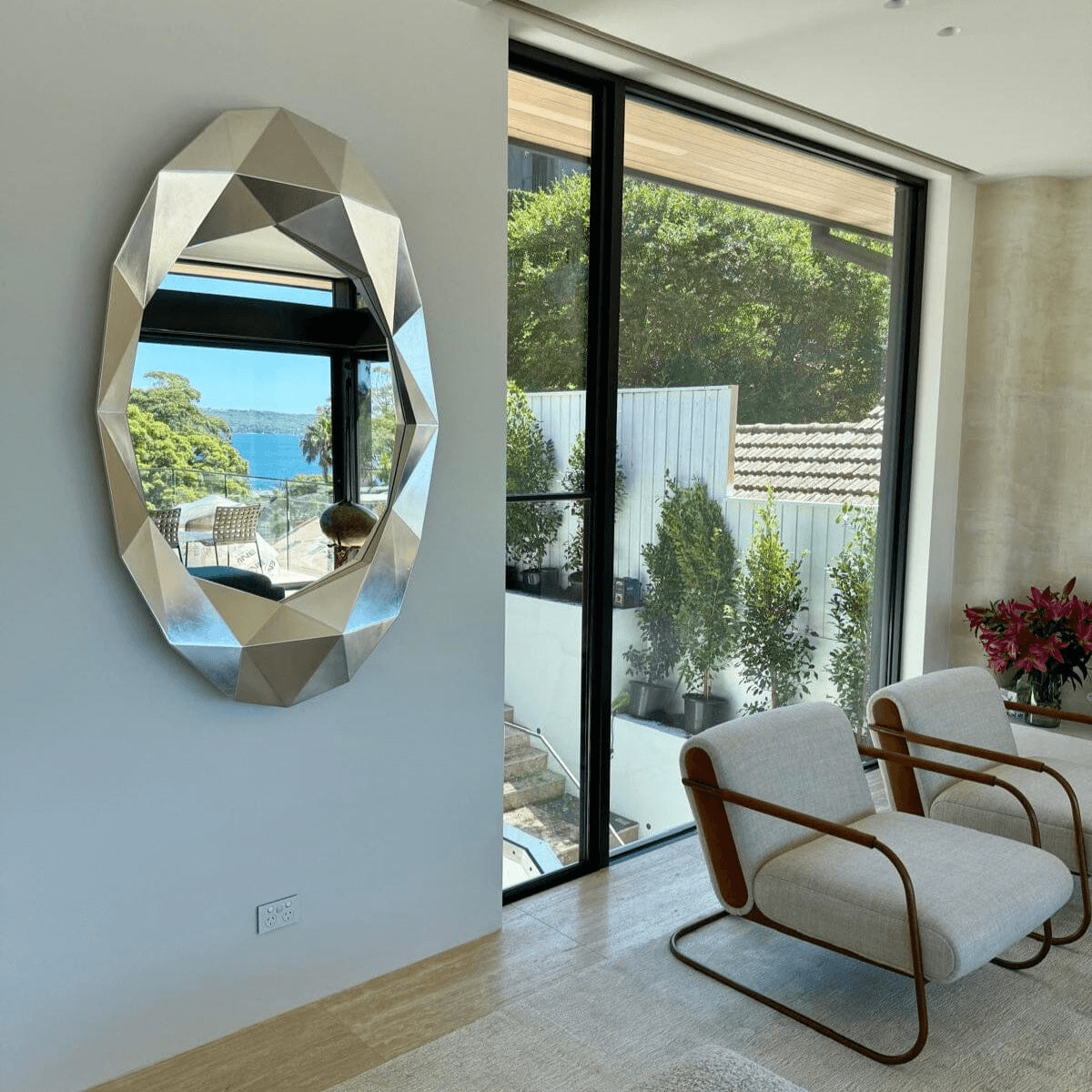
Home Decoration and Interior Design: Mirrors are a designer's secret weapon. A well-placed mirror can:
-
Create the Illusion of Space: Make a small room feel larger and more open.
-
Amplify Light: Reflect natural and artificial light to brighten dark corners and reduce the need for extra lamps.
-
Serve as a Focal Point: Ornate or uniquely shaped mirrors act as stunning pieces of art on their own.
-
-
Safety and Visibility:
-
Rearview and Side Mirrors on vehicles are critical for safe driving, allowing drivers to see blind spots.
-
Convex Security Mirrors in retail stores, at blind corners in hallways, or in warehouses help prevent accidents and deter theft.
-
2. Scientific and Technological Applications
-
Telescopes: Astronomers rely on massive, precisely curved parabolic mirrors to gather and focus light from the farthest reaches of the universe. The Hubble and James Webb Space Telescopes are premier examples.
-
Lasers: Mirrors are fundamental components in laser technology, forming the optical cavity that amplifies light to produce a concentrated beam.
-
Microscopes and Periscopes: Microscopes use mirrors to direct light onto specimens, while periscopes use angled mirrors to see over or around obstacles, famously used in submarines.
-
Solar Power: Concentrated solar power plants use vast arrays of mirrors (heliostats) to focus sunlight onto a central receiver, generating immense heat to produce electricity.
3. Art, Illusion, and Entertainment
-
Art Installations: Artists like Yayoi Kusama have famously used mirrors to create infinite, immersive worlds that challenge our perception of space and self.
-
Architecture: Modern architects use mirrors to create breathtaking buildings that blend into their environments, reflecting the sky and landscape.
-
Performance Magic: Magicians use cleverly angled mirrors to create classic illusions, such as making objects (or people) appear, disappear, or float.
-
Entertainment Parks: "Funhouse Mirrors" that distort our reflection into comical shapes are a timeless source of amusement.
-
Dance Studios: Wall-to-wall mirrors are indispensable for dancers to observe and perfect their form, alignment, and choreography.
4. Symbolic and Psychological Roles
-
Self-Reflection and Identity: The phrase "hold a mirror up to oneself" is literal and metaphorical. Mirrors force us to confront our own image, playing a key role in developing self-awareness and identity. They are powerful symbols in literature and film (e.g., Snow White, Through the Looking-Glass).
-
Spiritual and Religious Practices: Many cultures attribute spiritual significance to mirrors. They are seen as portals to other realms, tools for scrying (divination), or symbols of truth and enlightenment. In Feng Shui, mirrors are used to redirect energy (Chi) throughout a space.
-
Psychology: The famous "Mirror Test" is used to assess self-recognition in animals and young children, a key indicator of conscious awareness.
5. Specialized and Niche Uses
-
Signaling: In emergencies, a handheld mirror can be used to reflect sunlight and signal rescue parties over great distances.
-
Optics: Dentists use small mirrors to see hidden areas inside the mouth, and mechanics use them to see into tight engine spaces.
-
Two-Way Mirrors: Used in interrogation rooms and psychology research for discreet observation.
Conclusion
The humble mirror is a testament to human ingenuity. It is a simple sheet of glass with a metallic coating, yet its applications are boundless. It helps us see ourselves, understand the universe, create beauty, and stay safe. The next time you glance into a mirror, remember—you're looking at a tool that has shaped science, art, and culture for centuries.
The Application of Color Mirrors
MIRROR STORAGE SUGGESTIONS